As a certified organic skincare formulator and health coach, I’m excited to share my perspective on skincare alternatives that prioritize your health and wellbeing. You might be thinking, “But everyone recommends retinol; my dermatologist does!” Trust me, I understand the allure of retinol. It certainly has its merits. However, after years of crafting organic skincare solutions and guiding clients to achieve their best skin naturally, I’ve discovered that nature provides us with effective alternatives that align better with skin health. Personally, I favor this gentle approach wholeheartedly.
The Reality of Retinol: What You Need to Know
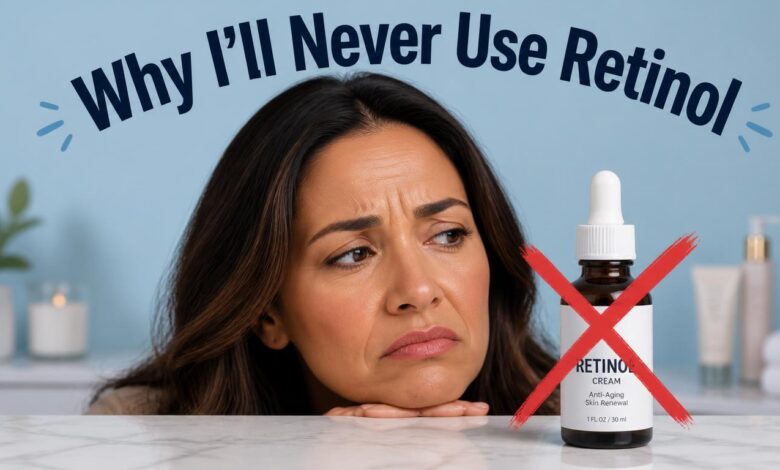
Let’s be candid about retinol and its effects on your skin. When you experience what’s known as a “retinoid reaction,” it’s a signal that your skin is irritated. Common symptoms include:
- Chronic dryness that leaves your skin feeling tight
- Peeling that can last several weeks
- Redness and inflammation
- Stinging sensations with other products
- Heightened vulnerability to sun damage
As a health coach, I have concerns about how we’ve normalized skin irritation as a “necessary evil” in the quest for youthful skin. It’s crucial to differentiate between skin that looks young and skin that looks truly healthy.
Photosensitivity and Sun Damage
One major concern with retinol is its tendency to increase photosensitivity. You’re applying a cream designed for youthful skin, but simultaneously, it’s making your skin more susceptible to sun damage—the very thing that accelerates aging. Even with diligent sunscreen application, the risk remains. One missed spot or forgotten reapplication could lead to detrimental consequences for your retinol-treated skin.
Risks During Pregnancy: Is It Worth It?
As someone who supports individuals throughout their lives, I find the restrictions of retinoids during pregnancy quite troubling. Despite topical retinol generally posing lower risks than oral versions, many healthcare providers recommend against it for those who are expecting or nursing. Why choose an ingredient that carries these risks when there are effective, natural alternatives available? Your skincare routine shouldn’t compromise during such a crucial phase of life.
The Chemical versus Natural Approach
This is where my background as a formulator shines. Retinol is a synthetic derivative that accelerates cell turnover by forcing your skin to operate at an unnatural pace. But what if we could achieve remarkable results by nurturing our skin’s natural processes instead?
Introducing Bakuchiol: Nature’s Remarkable Solution
Allow me to introduce Bakuchiol, derived from the babchi plant (Psoralea corylifolia). This ingredient has revolutionized my approach to skincare for mature skin, and here’s why:
-
Comparable Results: Research indicates that using 0.5% bakuchiol twice a day offers similar improvements in wrinkles and pigmentation as 0.5% retinol applied daily. The data speaks volumes.
-
Gentleness: Bakuchiol is mild and eliminates the “adjustment period.” You won’t experience peeling or redness; your skin feels comfortable while it transforms.
-
No Photosensitivity: Bakuchiol can be used at any time of day without raising the risk of sun damage—a huge advantage over retinol.
-
Pregnancy-Friendly: While definitive safety in pregnancy isn’t fully established, bakuchiol is considered a lower risk than retinoids. Always consult with your healthcare provider if you’re pregnant or nursing.
Perhaps you’re curious to dive deeper into the comparison between bakuchiol and retinol; I’ve elaborated on this topic in another detailed article.
How Bakuchiol Works: A Simple Explanation
Chemically, bakuchiol is distinct from retinol; however, it functions as a “functional analog,” meaning it provides similar benefits through different mechanisms. Instead of forcing rapid cell turnover, bakuchiol:
- Gently boosts collagen production.
- Supports your skin’s natural repair mechanisms.
- Offers antioxidant protection, an area where retinol falls short.
- Helps manage melanin production, which aids in fading dark spots.
- Delivers anti-inflammatory properties, soothing rather than irritating.
It’s a much gentler alternative, which is ideal for those seeking effective yet non-disruptive skincare.
The Clean Beauty Connection
As someone passionate about natural health, I’m delighted to report that bakuchiol aligns perfectly with clean beauty principles. It’s plant-based, integrates well with your skin’s natural functions, and doesn’t require suffering for results. However, ensure that you choose purified bakuchiol formulations. Lower-quality products may contain unwanted impurities, underscoring the importance of high-quality sourcing.
My Professional Recommendation: Why Bakuchiol Stands Out
I advocate for bakuchiol as an impressive alternative to retinol for several reasons:
-
Gentleness Without Sacrifice: Why cause irritation when there’s a better way?
-
Additional Antioxidant Boost: You receive anti-aging benefits alongside protective antioxidants.
-
Versatile Use: Use it in your morning or evening routine—there are no restrictions.
-
Compatibility: Bakuchiol pairs wonderfully with other natural ingredients such as hyaluronic acid and niacinamide.
Other Effective Natural Alternatives
I am excited to share additional natural alternatives that can improve your skin:
-
Rosehip Oil: This lovely oil is rich in antioxidants and contains linoleic acid, which hydrates deeply while preventing moisture loss. It is particularly beneficial for addressing hyperpigmentation and scarring.
-
Carrot Seed Oil: Packed with vitamin A, this oil offers plenty of antioxidant carotenoids that help fight free radicals and environmental stressors—like giving your skin a refreshing smoothie loaded with nutrients.
-
Sea Buckthorn Oil: Remarkably, this oil is known to have fifteen times more vitamin C than oranges and is rich in vitamins A, C, and E. It not only moisturizes deeply but also provides excellent protection against sun damage.
Transitioning to a Natural Routine: What to Expect
If you currently use retinol and are considering switching to bakuchiol, here’s some advice I offer to my clients:
-
Start slowly: Begin with a couple of nights per week to allow your skin to adapt.
-
Be patient: Natural ingredients may take longer to deliver results, but the effects tend to be longer-lasting.
-
Focus on consistency: It’s important to integrate products regularly over intensity.
-
Combine with complementary natural ingredients: This approach enhances overall benefits.
The Final Takeaway
I am neither anti-science nor anti-innovation. My goal is to find the safest, most effective methods that promote long-term skin health, particularly ones that draw from nature as much as possible. Bakuchiol has it all: proven results, excellent safety, and the reassurance of collaborating with nature rather than battling it.
Are you ready to embrace a new perspective? Remember, the aim isn’t merely to achieve younger-looking skin; ultimately, we’re all aging. The goal is to maintain healthy, vibrant skin that radiates from within.
Love, Patri xx
Resources
Here are some valuable resources for further reading:
- Research on bakuchiol applications in dermatology.
- Studies showcasing the properties of vitamin A derivatives.
- Comprehensive discussions on bakuchiol’s benefits compared to retinol.
Related Topics
- A critical look at the definition of “natural skincare.
- Understanding skincare certifications to avoid marketing pitfalls.
- Common skincare myths that often need debunking.
By exploring these resources, you can gain deeper insights into the natural skincare journey you may wish to embark on.