If your foundation keeps picking fights with your skin, you’re not alone. This guide walks you through exactly what to look for (and what to run from) when shopping for makeup for acne, so you can get real coverage without the aftermath.
Let’s be honest: finding a foundation that doesn’t throw your skin into chaos feels like a part-time job. You swipe on something that promises “flawless coverage,” and by hour three your cheeks are staging a full-blown rebellion. Sound familiar? If so, stick around, because we’re about to fix that.
Picking the right makeup for acne isn’t about luck. It comes down to ingredients, formula type, and a little bit of trial and error. Once you know what actually matters, shopping gets a whole lot easier, and honestly, kind of fun.
Why regular foundation wrecks acne-prone skin
Here’s the thing nobody tells you at the makeup counter: most foundations weren’t built with breakout-prone skin in mind. They’re built to look pretty in a bottle and glide on smooth, which usually means loading up on thick oils, heavy silicones, and waxes. Great for texture, terrible for your pores.
When those ingredients sit on inflamed or oily skin all day, they trap dirt, bacteria, and dead skin cells right where you don’t want them. Dermatologists point to comedogenic ingredients (the pore-clogging kind) as one of the biggest culprits behind makeup-triggered breakouts, and heavy oils, thick silicones, and certain waxes are the most common repeat offenders. So it’s not really your skin overreacting. It’s the formula doing exactly what it was never designed not to do.
And if your skin is sensitive on top of being acne-prone, you’ve got a double whammy. Fragrance, alcohol, and certain preservatives can trigger redness and stinging even in products that technically won’t clog your pores. That’s why “for acne-prone skin” and “for sensitive skin” don’t always mean the same thing on a label, and why you’ll want to check for both.
What to actually look for in makeup for acne
Okay, let’s get into the good stuff. When you’re scanning ingredient lists (or, let’s be real, squinting at them in a store aisle), here’s your cheat sheet.
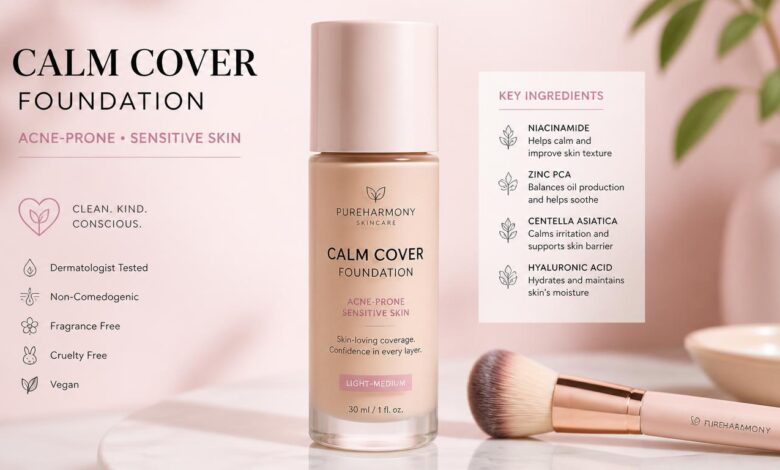
- Non-comedogenic formulas. This is non-negotiable. Dermatologists consistently steer clients toward noncomedogenic, oil-free foundations that skip heavy waxes, oils, and silicones.
- Oil-free bases. Less oil means less shine, and less shine means fewer excuses for your pores to throw a party.
- Blemish-fighting ingredients. Salicylic acid, benzoyl peroxide, and tea tree oil have a long track record for calming breakouts, and some foundations now build these right into the formula.
- Soothing extras. Zinc oxide and niacinamide are worth seeking out too, since lightweight, non-comedogenic, oil-free formulas with these ingredients help cut down on clogged pores and breakouts.
- Fragrance-free where possible. If your skin is reactive, fragrance is often the sneaky trigger nobody suspects.
One more thing worth knowing: not every “mineral foundation” is automatically safe. Mineral formulas are a solid starting point, but the category isn’t universally perfect, and it’s still smart to double-check the full ingredient list before committing.
Foundation types worth trying (and a few worth skipping)
Not all foundation formats are created equal when your skin is temperamental. Some are basically built for you, others are a gamble.
- Mineral powder foundation – Lightweight, breathable, and generally low on the irritation scale. A great pick if you want buildable coverage without feeling like you’re wearing a mask.
- Skin tints and tinted moisturizers – Sheer, hydrating, and forgiving on active breakouts. They won’t hide a lot, but they won’t feed the problem either.
- Oil-free liquid foundation – The workhorse option. Full coverage without the heaviness, especially if it’s labeled non-comedogenic.
- Stick foundations – Convenient, but check the wax content carefully, since sticks can lean heavier than liquids.
- Traditional cream foundation – Generally the riskiest for acne-prone skin. Rich, thick, and often loaded with the exact oils and waxes you’re trying to dodge.
If you’re not sure where to start, a mineral or oil-free liquid formula is usually your safest bet. You can browse a solid range of non-comedogenic foundations on Amazon and filter by ingredient callouts right in the product listings.
How to patch test before you commit
Nobody wants to buy a full-size foundation only to break out three days later. That’s what patch testing is for, and it takes way less effort than most people think.
Dab a small amount along your jawline or behind your ear and leave it alone for 24 to 48 hours. Watch for redness, itching, or new bumps. If your skin stays calm, you’re probably good to bring it into your regular routine.
A few tips to make this process painless:
- Test one new product at a time, not three at once.
- Avoid testing right before a big event, just in case.
- Take a quick photo before and after so you’re not relying on memory alone.
- Give it the full 48 hours, since some reactions show up late.
It’s a small step, but it saves you money, time, and a whole lot of frustration down the line.
Here’s a habit worth building in too: keep a tiny notebook or a note on your phone tracking which products you’ve tested and how your skin reacted. It sounds tedious, but after a few months you’ll have a personal map of what your skin tolerates and what it doesn’t. That map becomes way more useful than any online review, because it’s based on your actual skin, not someone else’s.
Application tips that make a real difference
Even the best makeup for acne can misbehave if it’s applied the wrong way. A few small habits go a long way here.
Start with clean hands and a clean brush or sponge. Bacteria transfer is one of the most overlooked causes of breakouts, and it has nothing to do with the foundation itself. Wash your brushes weekly, not “whenever you remember,” because buildup on bristles is basically a breeding ground.
Apply in thin layers and build up only where you need it. Piling on product in one go traps more heat and oil against the skin than a few light layers ever will. And please, resist the urge to touch your face throughout the day. Every touch reintroduces oil and bacteria right back onto skin you just spent time protecting.
Ingredients to steer clear of
Just as important as what to look for is knowing what to avoid. Certain ingredients show up again and again as red flags for breakout-prone skin.
- Coconut oil (highly comedogenic for many skin types)
- Isopropyl myristate
- Sodium lauryl sulfate (SLS)
- Added fragrance
- Heavy waxes and lanolin
None of these are automatically bad for everyone, since skin reacts differently from person to person. But if you’ve been struggling with persistent breakouts, cutting these out of your foundation search is a reasonable first move.
It also helps to remember that ingredients rarely act alone. How long a product sits on your skin, how thick a layer you’re applying, and how thoroughly you remove it at night all play a role too. A slightly imperfect formula removed properly at night will usually cause less trouble than a “clean” one left on for eighteen hours straight. Cleansing habits matter just as much as the shopping decision itself.
Building a routine around your foundation
Foundation doesn’t exist in a vacuum. What you put on before and after it matters just as much as the formula itself. A lightweight, oil-free moisturizer underneath gives your foundation something smoother to grip onto, which usually means less product needed overall.
At night, don’t just wipe your face and call it done. Double cleansing, first with an oil-based cleanser to break down makeup and SPF, then a gentle water-based one to finish, tends to leave far less residue behind than a single quick wash. Skipping this step is one of the most common reasons people blame their foundation for breakouts that were actually caused by leftover product sitting in their pores overnight.
Frequently asked questions
Can makeup for acne actually make breakouts worse? Yes, it can, if the formula is comedogenic or heavy. That said, the right foundation won’t cause new breakouts and can even help camouflage existing ones while you treat them.
Is mineral makeup always better for acne-prone skin? Not always. Mineral foundations are a great starting point, but some formulas can feel drying, especially in colder weather. Ingredient quality still matters more than the “mineral” label alone.
Should I skip foundation entirely while breaking out? Not necessarily. Many dermatologists say lightweight, non-comedogenic formulas are fine to wear during a breakout, as long as you remove them thoroughly at night.
How often should I replace my foundation? Liquid foundations typically last around 12 months once opened. If you’re acne-prone, don’t stretch that timeline, since bacteria buildup in old product can trigger new breakouts.
Does higher price mean better quality for acne-prone skin? Not really. Plenty of budget-friendly, oil-free, non-comedogenic formulas perform just as well as pricier options. Ingredients matter far more than the price tag.
Wrapping it up
At the end of the day, finding makeup for acne that actually works for you comes down to reading labels, patch testing before committing, and giving your skin a little grace while you figure out what fits. It won’t happen overnight, but once you land on the right formula, you’ll wonder why you ever settled for anything less.
Your skin deserves coverage that works with it, not against it. So next time you’re browsing foundations, skip the flashy packaging and go straight for the ingredient list instead. That’s where the real answer is hiding.