The beauty industry has effectively promoted commercial skincare products as the ultimate solution to all skin issues. We’re led to believe that spending more equals better skin, but this is a common misconception. The reality is that the focus has shifted from genuine skin care to profit maximization. Many of these commercial products are loaded with synthetic ingredients intended to prolong shelf life, facilitating global distribution rather than nourishing holistic skin health. While they may provide momentary relief, the long-term ramifications can be detrimental. When we shift our focus from stylish packaging and exaggerated claims to the essential needs of our skin, we recognize that natural ingredients are the true path to achieving radiant, healthy skin.
Addressing Common Assumptions
Many individuals mistakenly believe that commercial skincare products are beneficial for their skin due to several factors:
- The high price tag suggests quality.
- Established companies must know what they are doing.
- Wide availability implies effectiveness.
However, these perceptions can be misleading. Once upon a time, these products may have started with good intentions—to help consumers feel and look their best. Yet, the current landscape often prioritizes profitability over genuine skin care. Products that traverse continents necessitate extensive preservation, which raises inherent concerns about their ingredients.
Unpacking the Effects of Commercial Skincare
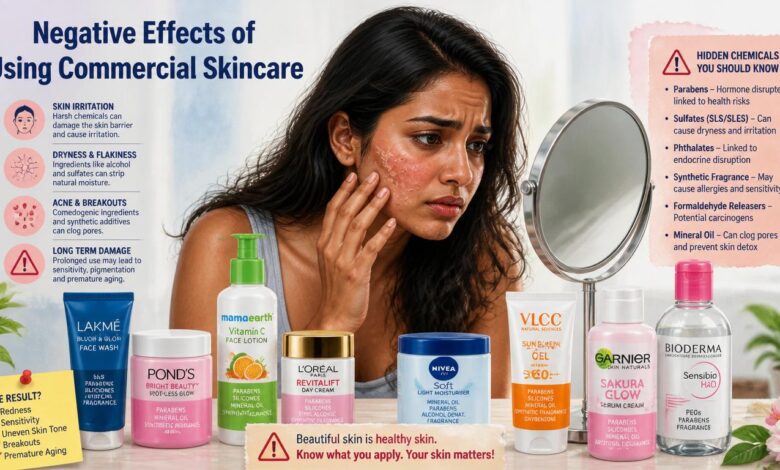
I’m here to illuminate some of the risks associated with these commercial skincare items. The following highlights specific detriments that users might unwittingly face from these products.
1. Pore-Clogging Ingredients
Many commercial lotions and creams contain substances like silicones and mineral oils, notorious for clogging pores. This blockage can trap dirt and bacteria beneath the skin, leading to breakouts and acne. While silicones may offer a momentary smooth look, they disrupt the skin’s ability to breathe. Mineral oils are particularly harmful for those with oily or acne-prone skin due to their occlusive nature.
2. Skin Irritation from Harsh Chemicals
The presence of harsh chemicals—including parabens, sulfates, and synthetic fragrances—is prevalent in numerous commercial skincare formulas. Parabens, which serve as preservatives, have been shown to mimic hormones and might upset the endocrine system. Sulfates act as cleansing agents but can strip away natural oils, leading to irritation and dryness. Additionally, synthetic fragrances can contain a cocktail of undisclosed chemicals, potentially causing allergic reactions such as redness, itching, or rashes.
3. Weakened Natural Skin Barrier
Using synthetic ingredients regularly can harm the skin’s natural oils, critical for maintaining balance and health. This stripping weakens the skin’s natural barrier, a protective layer that retains moisture and blocks irritants. Once this barrier is compromised, skin sensitivity, redness, and dryness can escalate, making skin even more susceptible to environmental damage.
4. Accelerated Aging
Many commercial products house ingredients like alcohol and certain preservatives that dry out the skin and strip essential moisture. Paradoxically, these formulations often claim to prevent the very wrinkles and fine lines that they may instead promote. Alcohol evaporates quickly, leading to a tight or dehydrated feel, while some preservatives can inflict long-lasting harm.
5. Allergic Reactions to Artificial Fragrances
Artificial fragrances and dyes can elicit a spectrum of allergic reactions in some users, with symptoms ranging from slight inflammation to severe responses, such as hives. The lack of transparency in these manufactured scents complicates the ability to know what exactly is applied to the skin, with potential variations in reactions depending on individual sensitivities.
6. Hormonal Disruption from Endocrine Disruptors
Some skincare items contain endocrine disruptors, like phthalates and parabens, capable of mimicking hormones. These chemicals could lead to hormonal imbalances over time, affecting the body’s natural processes. Absorbing through the skin, they may accumulate, possibly impacting reproductive health and escalating potential health risks.
7. Dependency on Commercial Formulas
Numerous commercial skincare products are designed for quick, superficial results, providing immediate yet fleeting improvements. This encourages users to continuously apply them; over time, the skin can become reliant on these products. Ceasing use may trigger adverse reactions like increased breakouts or dryness, creating a perpetual cycle of purchase and application.
8. Environmental Impact of Microplastics
Moreover, our skincare choices impact not just our skin but also the planet. Ingredients, like microplastics that often appear in commercial products, contribute to environmental pollution as they wash down drains and enter aquatic ecosystems. These particles pose a threat to marine life and, ultimately, our food chain.
9. pH Imbalance Leading to Skin Issues
The natural pH of your skin is crucial for its health. Many commercial products are not formulated to respect this balance, often resulting in skin pH disturbances. Such imbalances can trigger irritation, increased oil production, or dryness, suggesting a need for formulations that cater to the natural levels of skin acidity.
10. Sensitization from Prolonged Use
Even seemingly benign products can become problematic when used over extended periods. Ingredient sensitization may develop, meaning your skin can develop reactions to components it once tolerated well. Common culprits include artificial fragrances, dyes, and certain preservatives, leading to chronic discomfort or irritation.
11. Disruption of the Skin Microbiome
Your skin harbors a delicate microbiome, a community of beneficial bacteria that play a significant role in protecting against harmful elements. Many commercial products contain antibacterial agents or harsh chemicals that disrupt this natural balance, resulting in heightened sensitivity, redness, and other skin challenges.
12. Increased Sun Sensitivity and Hyperpigmentation
Certain commercial skincare ingredients, such as specific acids and retinoids, can make the skin more prone to sun sensitivity. Without adequate sun protection, this heightened vulnerability can lead to hyperpigmentation or uneven skin tone.
Making the Transition to Natural Alternatives
Opting for natural and organic skincare products can help you sidestep many of these potential issues. By selecting ingredients that work in harmony with your skin rather than against it, you can achieve a healthy glow without unwarranted side effects.
Reevaluating Skincare Choices
It is high time to stop trusting products solely based on their price or appealing packaging. If commercial skincare products are introducing blockages, irritations, hormonal disruptions, and environmental issues, how can they be beneficial for your skin? It’s essential to remember that your skin deserves better—ingredients that nurture, heal, and align with its natural state.
The allure of quick fixes and empty promises in synthetic skincare can lead to a cycle that neglects the root needs of your skin. Instead, imagine a skincare regimen that not only provides immediate improvements but also bolsters long-term health and vitality.
Your Next Steps Toward Healthier Skin
Take a moment to critically evaluate what products you are using on your skin. Don’t allow clever marketing to skew your judgment. Start by substituting just one commercial product with a natural alternative, and you will likely notice a significant difference.
Remember, your skin can differentiate between synthetic fillers and genuine nourishment. You deserve skincare that aligns with your values—pure, honest, and beneficial. Transitioning to natural options is not just a beneficial choice for your skin but also for the planet. Embrace the switch!