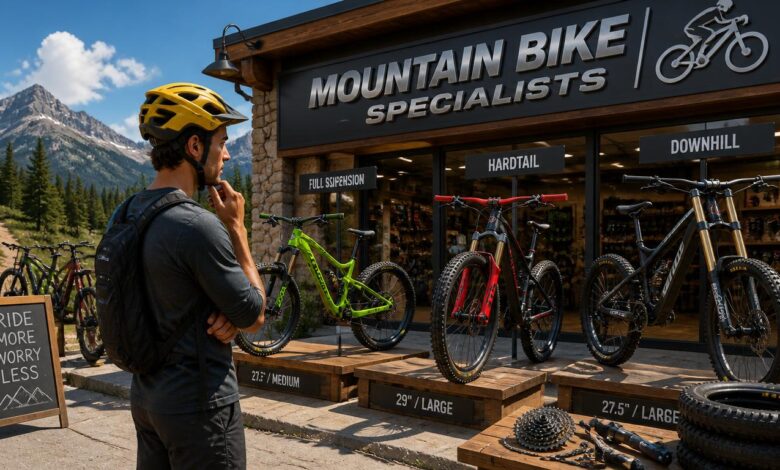
The Ride That Changes Everything — Starting With Your Blood Flow
Picture this: you’re 45 minutes into a trail ride, the scenery is stunning, but your legs feel like they’re filled with wet cement. You stop, shake them out, wonder if you’re just unfit. But here’s the twist — it might not be your fitness at all. It might be your bike.
Yep, the machine you’re sitting on has a dramatic effect on Circulation in Your Legs. Not in some vague, hand-wavy wellness sense — in a very real, biomechanical, vascular sense that exercise physiologists have been documenting for decades. And yet, when most people ask how to choose a mountain bike, the conversation immediately goes to wheel size and suspension travel. Let’s change that.
Blood, Bikes, and the Biology You Skipped in School
Quick science hit — promise it won’t hurt. Your legs contain some of the largest veins in your body. Unlike arteries (which have muscular walls that push blood), veins rely heavily on external compression from surrounding muscles to push blood back up toward the heart. This mechanism is called the “skeletal muscle pump,” and cycling is one of the most effective ways to activate it.
Here’s where it gets interesting: not all cycling positions activate that pump equally. A poorly fitted bike forces you into awkward postures that compress veins instead of working with them. The result? Blood pools in the lower legs, oxygen delivery drops, and you get that heavy, dead-leg feeling — sometimes even tingling or cramping. PVD (peripheral vascular disease) patients actually use stationary cycling as therapeutic intervention for exactly this reason. So no, this isn’t just about comfort. This is medicine on two wheels.
Wheel Size First — Yes, It Affects Your Body More Than You Think
Let’s kick things off with something that surprises almost everyone: wheel diameter genuinely affects your body mechanics and, indirectly, Circulation in Your Legs. Here’s the breakdown:
- 26″ wheels (classic, mostly vintage now): Snappy handling, but the lower bottom bracket height can push your knees inward on rough terrain — bad news for knee joint circulation.
- 27.5″ wheels (650b): The sweet spot for most riders under 5’10”. Better rollover, more natural leg extension arc.
- 29″ wheels (29er): Smoother roll-over, higher bottom bracket, and a slightly more extended pedaling arc. For taller riders especially, this geometry encourages a fuller, healthier leg extension — which maximizes that skeletal muscle pump we talked about.
The takeaway isn’t “29ers are best.” The takeaway is: match wheel size to your height and riding style, because a mismatched wheel size throws off your entire lower-body kinetic chain. And a compromised kinetic chain? That’s a circulation problem waiting to happen.
The Geometry Game: Stack, Reach, and Why Your Hips Are the Boss
Frame geometry is where most first-time buyers’ eyes glaze over — and I get it, “stack and reach” sounds like furniture assembly instructions. But stick with me here because this is genuinely important.
Stack refers to the vertical height from the bottom bracket to the top of the head tube. A higher stack = more upright riding position = less hip flexor compression. And compressed hip flexors, by the way, are notorious circulation killers. The femoral artery — your leg’s main blood supply highway — runs right through the hip crease. Bend forward aggressively on a bike with low stack, and you’re literally kinking that hose.
Reach is the horizontal distance from the bottom bracket to the head tube. Too long a reach causes you to overextend through the torso, rotate the pelvis forward, and — you guessed it — compress those same hip structures. The ideal? A “neutral pelvis” position where your sit bones are directly over the pedal spindles and your spine maintains a gentle natural curve. Modern trail bikes (think 65–67 degree head tube angle with medium reach) generally nail this balance well.
Suspension Travel: Finding Your Goldilocks Zone
Here’s a question worth asking: how much suspension is actually good for your legs? Too little and your muscles are constantly bracing. Too much and your legs become passengers — weak and underworked. Neither extreme is great for long-term vascular health.
Let’s break it down by ride type:
- Cross-country (XC) bikes — 80–100mm travel: Efficient, fast, but punishing on rough terrain. Great for building powerful, vascular-efficient legs if you’re already fit. Tough if you have any circulation issues.
- Trail bikes — 120–140mm travel: The ideal middle ground. Enough cushion to let legs relax between pedal strokes, enough feedback to keep muscles engaged as natural circulatory pumps.
- Enduro bikes — 150–170mm travel: Excellent cushioning, but the slack geometry (designed for steep descents) puts you in a more reclined hip position — not always ideal for climbing circulation.
- Downhill (DH) bikes — 180mm+: Not a pedaling bike; leave these out of the circulation conversation entirely.
For most riders seeking the best combination of trail performance and leg circulatory health, a trail-geometry bike with 130mm of travel hits the sweet spot. Something like a Polygon Siskiu T7 or a Vitus Nucleus VR — browse comparable options on Amazon — offers exactly this balance at a reasonable price.
Saddle Science: The Part That Touches You Most
I’ll say it plainly: a bad saddle is a circulation catastrophe. And sadly, most stock saddles that come on entry-level bikes were designed to look good in a showroom, not to support actual human anatomy in motion.
The key issue? Perineal compression. The perineal region contains both arterial and venous vessels supplying the inner thigh and lower leg. A saddle that’s too narrow, too hard, or positioned with the nose tilted upward puts direct pressure on these structures within minutes of riding. You might not feel it immediately, but the numbness that creeps into your inner thighs or feet halfway through a ride? That’s vascular compression talking.
What to look for in a saddle upgrade:
- Central channel or full cutout design: Relieves pressure on soft tissue and underlying vessels entirely
- Foam density: Medium-firm is better than ultra-soft (which collapses and creates pressure points)
- Width matched to sit bones: Most women need 138–155mm; most men need 130–145mm (get measured at a bike shop)
- Short-nose or “short saddle” design: Increasingly popular for MTB — dramatically reduces perineal load
Check out highly rated options like the Selle Italia SLR or Fabric Scoop saddles on Amazon — your legs will feel the difference on ride one.
Crank Length and Pedaling Mechanics: The Detail Shops Never Mention
Here’s an insider tip that even experienced riders overlook — crank length. Most bikes ship with 170mm or 175mm cranks as a default. But if you have shorter legs or limited hip mobility, long cranks force your hip into deep flexion at the top of every pedal stroke. That repeated compression of the hip crease, hundreds of times per ride, is a genuine impedance to blood flow.
Shorter cranks — 165mm or even 160mm — allow a shallower hip angle at top-dead-center, reducing arterial compression and actually improving pedaling smoothness. This is why many professional XC racers have switched to shorter cranks in recent years. It’s not just about aerodynamics — it’s biomechanical efficiency, and circulation is a direct beneficiary.
If your current bike has long cranks and your hips feel stiff at the top of the pedal stroke, this single $40–80 component swap could change your riding experience dramatically. Shimano and SRAM both make aftermarket cranks available through Amazon.
Handlebar Width and Rise: Posture Is Circulation
Wide bars are trendy in mountain biking right now — and for good reason, up to a point. Wider bars (750–800mm) open up the chest and shoulders, which actually improves thoracic breathing efficiency. Better breathing = better oxygen delivery = better circulation throughout the legs. Win!
But here’s the catch: bars that are too wide cause you to hunch your shoulders inward in a compensatory shrug, creating tension through the trapezius and upper back that chains all the way down through the spine and into the pelvis. The pelvis tilts, the hip flexors tighten, and — there it is again — compromised circulation in the legs.
The ideal bar width? Start with shoulder-width (measure acromion to acromion in centimeters, convert to millimeters) and go no more than 20–30mm wider on each side. For most riders, that lands in the 740–780mm range. Pair that with 20–30mm of bar rise to bring the hands up slightly, reduce forward lean, and open the hip angle. Simple, cheap, effective.
Tire Pressure and Rolling Resistance: The Unsung Hero
Okay, hear me out — tire pressure affects circulation? Indirectly, yes. Here’s the logic. Running overly high tire pressure on rough terrain means the bike skips and bounces rather than rolls smoothly. Your legs constantly brace and absorb micro-impacts, staying in a state of low-level sustained contraction. As we’ve established, sustained muscle contraction restricts venous return.
Drop your pressure to the tubeless-recommended range (typically 18–25 PSI front, 20–28 PSI rear depending on rider weight) and suddenly the tire conforms to the terrain, the ride smooths out, and your legs can cycle through proper contraction-and-relaxation phases. It’s the same principle behind why foam rollers and massage help circulation — rhythmic compression and release, not constant tension.
This is a zero-cost adjustment. Just a pump and a pressure gauge. Topeak and Lezyne make excellent trail-ready floor pumps on Amazon that make dialing in pressure a 60-second ritual before every ride.
The Mental Game: Choosing a Bike You’ll Actually Ride
Let’s bring in the psychology for a moment, because this is wildly underrated. The “best” mountain bike for leg circulation is the one you’ll consistently get on and ride. Because the single most powerful thing cycling does for your vascular health is exactly that — repeated, regular cardiovascular stimulus over weeks and months.
Studies in behavioral psychology consistently show that aesthetic pleasure and emotional connection to a piece of equipment significantly predict usage frequency. In plain English: if you love how your bike looks and feels, you’ll ride it more. If you grudgingly tolerate it, you’ll find excuses not to.
So yes — color matters. Brand story matters. The way it feels when you pick it up matters. Don’t let anyone talk you out of the bike that makes your heart race a little when you look at it. Because that emotional response? It’ll keep you riding. And riding is what improves Circulation in Your Legs more than any single component choice ever could.
Frequently Asked Questions
Does bike fit really affect leg circulation that much?
Absolutely, and the evidence is strong. A misaligned saddle height alone can increase peak knee compression forces by 30%, directly restricting popliteal blood flow. Multiply that over a 2-hour ride and the cumulative circulatory impact is significant.
How often should I ride to improve leg circulation?
For meaningful vascular adaptation, aim for at least 3–4 sessions per week of 30–60 minutes each. Consistency beats duration — three 40-minute rides do more for your circulation than one 3-hour weekend epic.
Are electric mountain bikes (e-MTBs) good for circulation?
Surprisingly yes — especially for older riders or those with existing circulation issues. The pedal-assist allows longer rides at sustainable effort levels, keeping the skeletal muscle pump active without excessive fatigue. The key is to still pedal; don’t just throttle.
Can mountain biking help with varicose veins?
Cycling can help manage symptoms and slow progression by strengthening the calf muscle pump and improving venous tone. However, it’s not a cure, and you should consult a vascular specialist before starting an intense riding program if you have diagnosed venous insufficiency.
What’s a reasonable budget for a health-focused mountain bike?
You don’t need to spend a fortune. A well-fitted hardtail in the $600–$1,200 range with an upgraded saddle and correct tire pressure setup will outperform a $3,000 bike with poor fit every single time — especially for circulatory health.
Wrapping It All Up: Ride Right, Live Better
At the end of the day — or the trail — the connection between smart bike selection and healthy Circulation in Your Legs is undeniable. From frame geometry and crank length to saddle design and tire pressure, every element of your mountain bike setup either works with your vascular system or against it.
The beautiful thing? Most of these optimizations cost little to nothing. A saddle swap here, a stem spacer there, a tire pressure tweak before each ride — these micro-adjustments compound into a dramatically better physiological experience every time you clip in (or step onto your flats).
Choose the right bike. Set it up properly. Ride it consistently. That’s the formula — not just for better trail performance, but for legs that feel alive, energized, and healthy for decades to come. Now go get dusty.